Who can do it
You do not need to be a cave diver, but it is not a first dive either.
- Open Water certified or higher
- Decent buoyancy control
- Comfortable underwater
- Looking for something different from reef diving
Cenote diving in Playa del Carmen
If you spend more than five minutes around divers in Playa del Carmen, you will hear one word come up again and again: cenote. To the Maya, they were sacred wells. For divers, they are the entrance to one of the largest underground river systems on the planet. And no, this is not just another dive.
Why cenote diving is different
Most diving in the Riviera Maya is on the reef. Cenotes are the opposite. They trade coral for rock formations, marine life for beams of light, and ocean motion for a slower, more controlled experience.
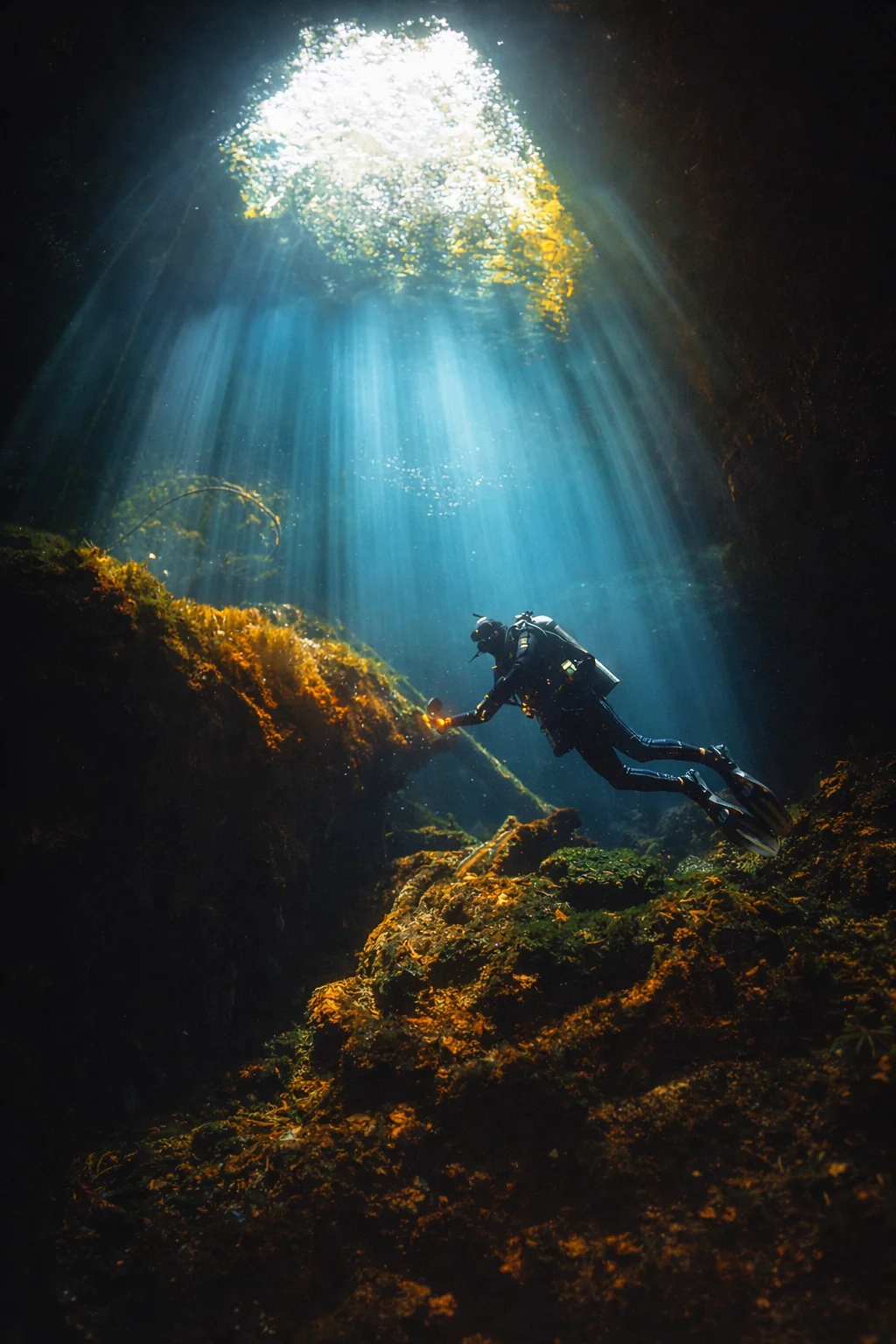
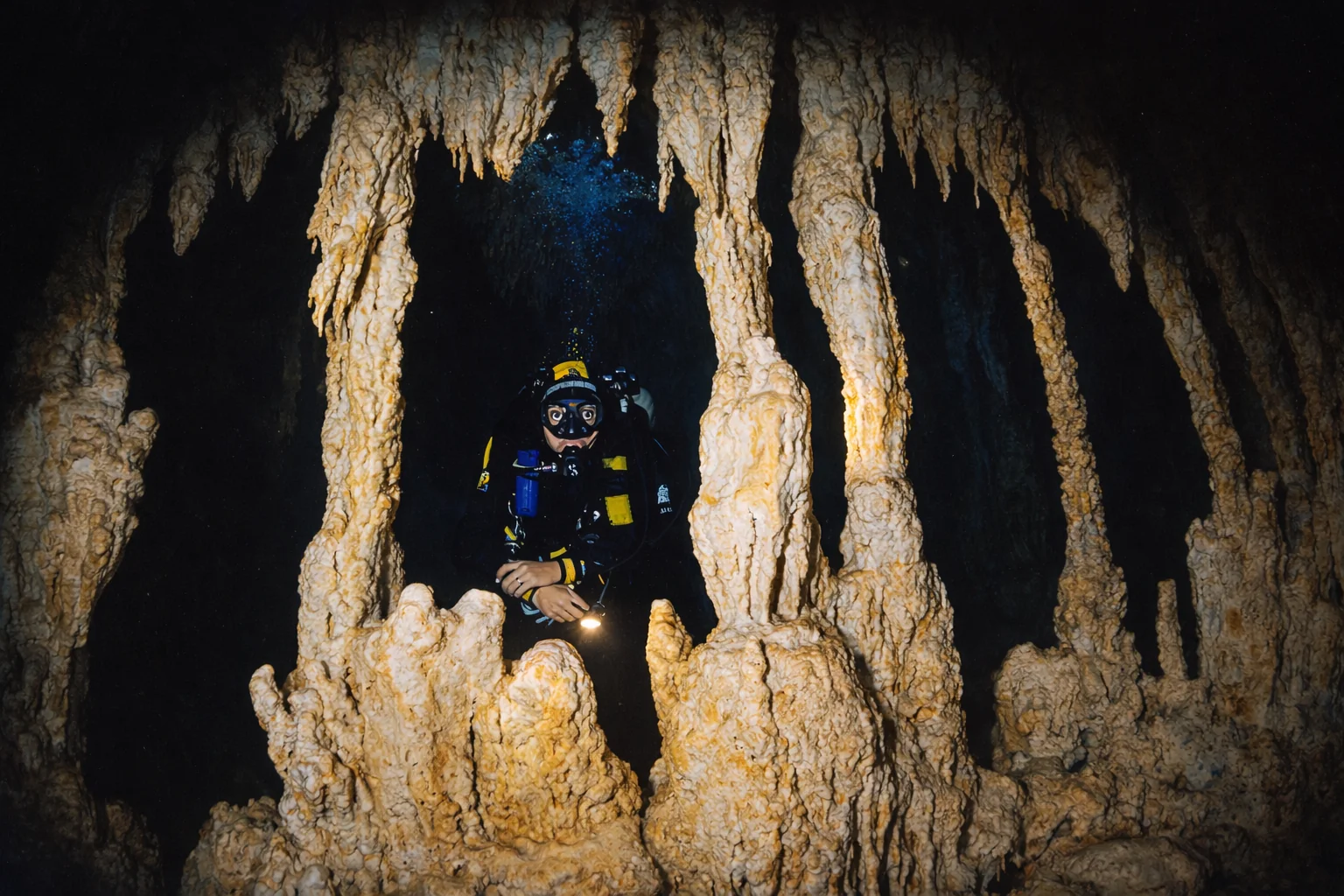
These systems were dry caves thousands of years ago. When they flooded, they preserved massive stalactites and stalagmites, real cave formations rather than reef structure. When sunlight cuts through openings above, you get those clean vertical rays that look impressive in photos and even better in person.
What the dive actually feels like
We stay in the cavern zone, which means natural light is always visible and you are never in complete darkness. There is no drifting, no fighting the water, and no need to rush the experience.
It is a slower kind of diving. Freshwater clarity often reaches well beyond what most ocean dives offer, and the controlled conditions make the whole experience feel calm, deliberate, and slightly unreal in a good way. Most divers come out of their first cenote dive saying some version of, "That did not feel like a normal dive."
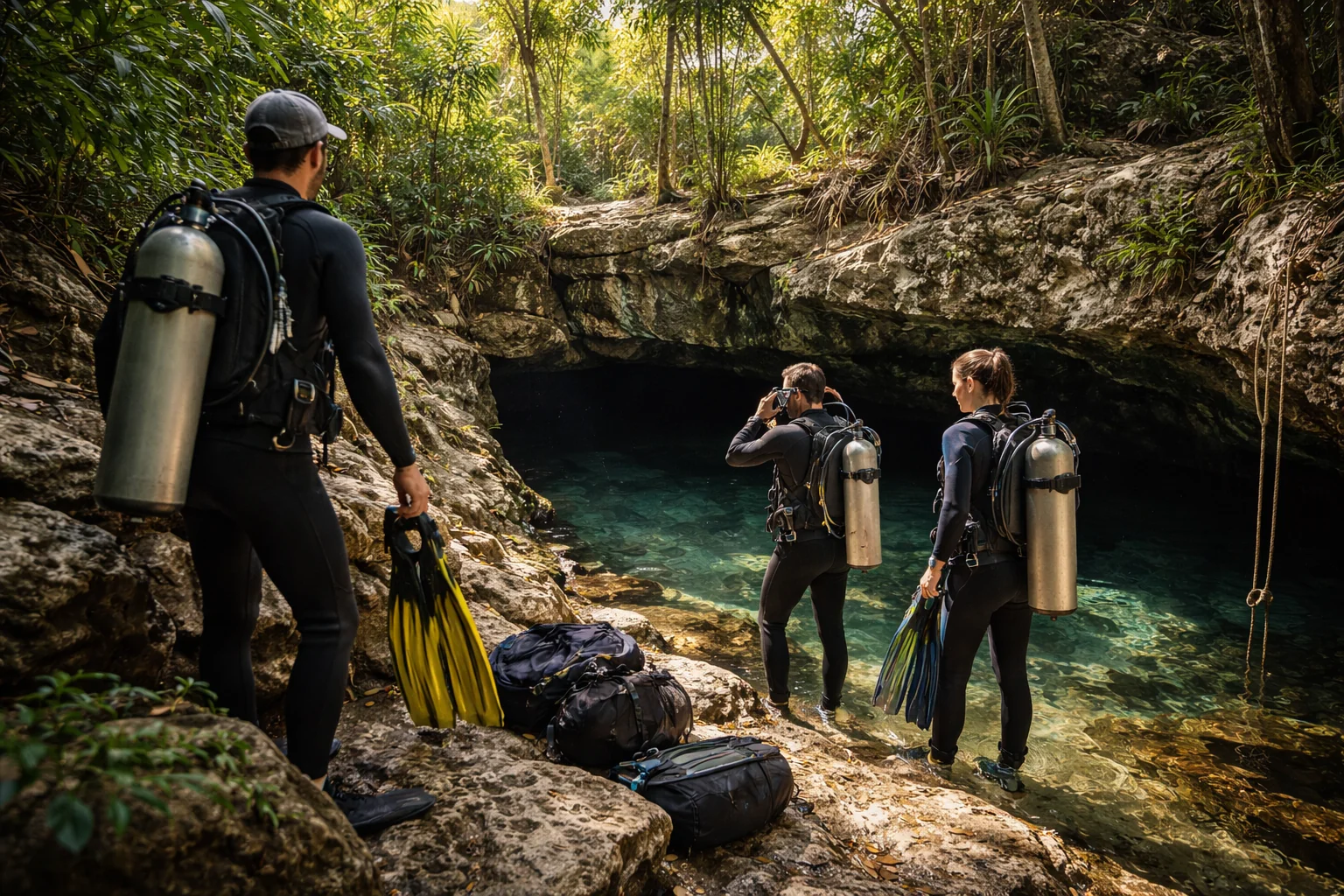
You do not need to be a cave diver, but it is not a first dive either.
Sometimes the right answer is "not yet," and that is better than forcing it.
Cavern vs cave
What you will be doing is cavern diving: always within sight of daylight, guided the entire time, and well within recreational limits.
The practical setup
A typical day means meeting at the shop in the morning, driving out in an air-conditioned vehicle, and doing two different cavern dives with snacks and water between dives.
We help choose the right cenotes based on your experience level, how open or enclosed you want the site to feel, and the kind of formations you want to see. Small groups make a real difference here, so we keep it to a maximum of four divers per guide.
Technique and respect
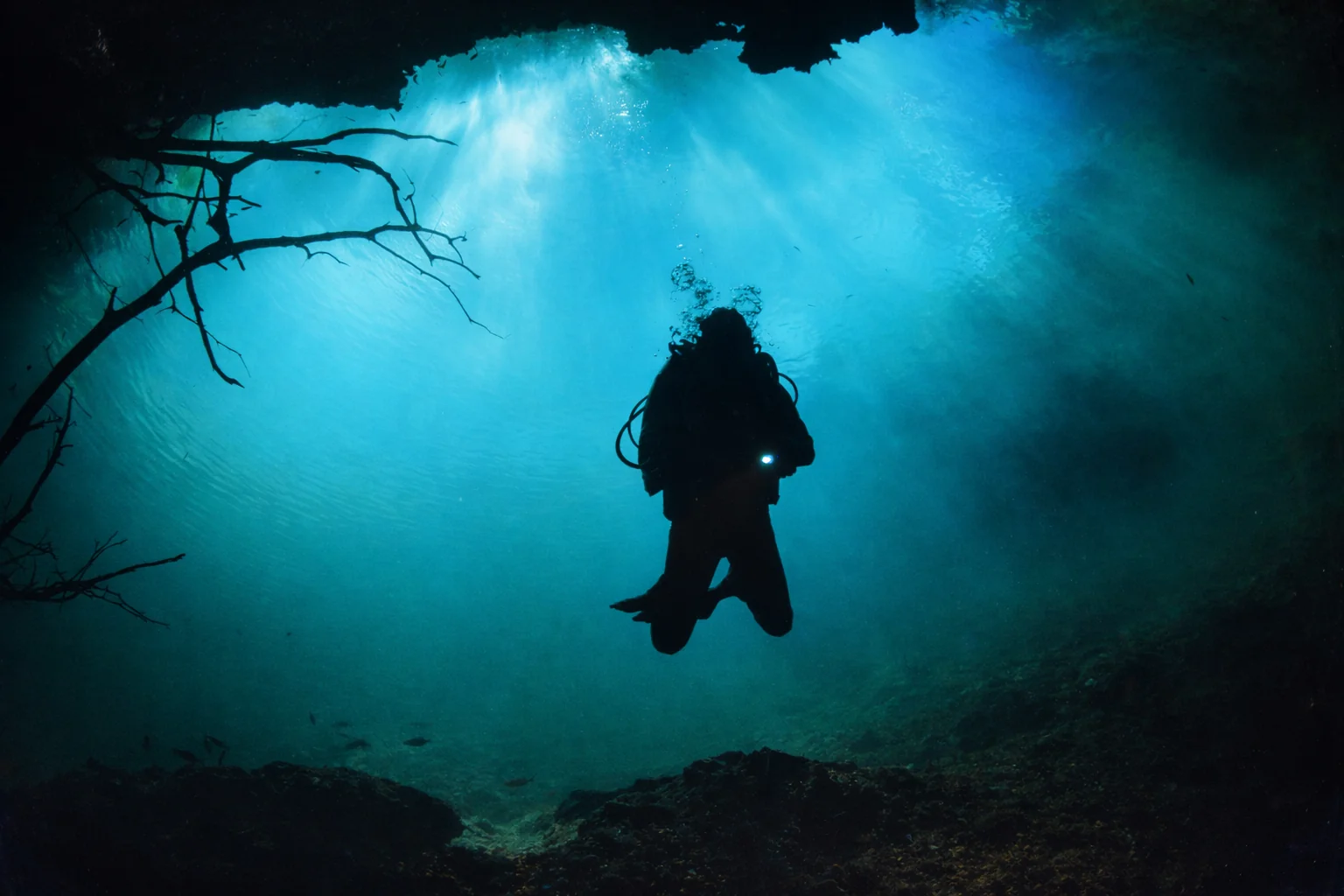
Cenotes are fragile. The basic idea is simple: stay horizontal, keep your fins up, and use short, controlled kicks. We will show you exactly how before the dive.
That keeps the water clear, protects the formations, and makes you a better diver in general. It is also why a refresher first can be the smartest call for someone who has not dived in a while.
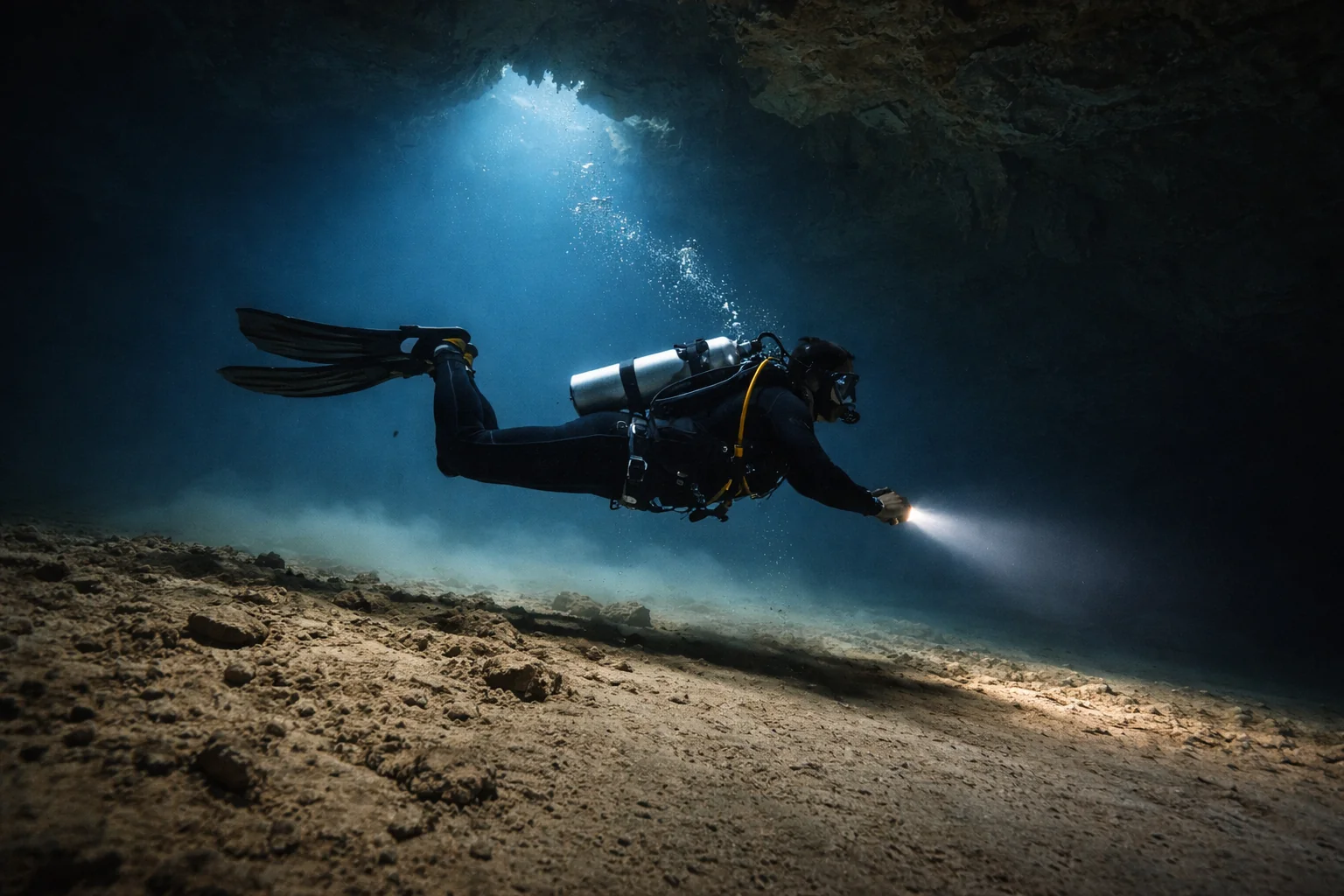
Good trim, controlled kicks, and respect for the space protect the formations and keep the water clear for everyone in the group.
Reef vs cenote diving
Why do cenotes here
Short access from Playa del Carmen, a huge variety of cenotes, guides trained specifically for cavern diving, and warm predictable conditions all make this one of the signature experiences of diving in the Riviera Maya.
This is not a side activity. For a lot of divers, it is one of the main reasons to dive here in the first place.
Favorite cenote dives
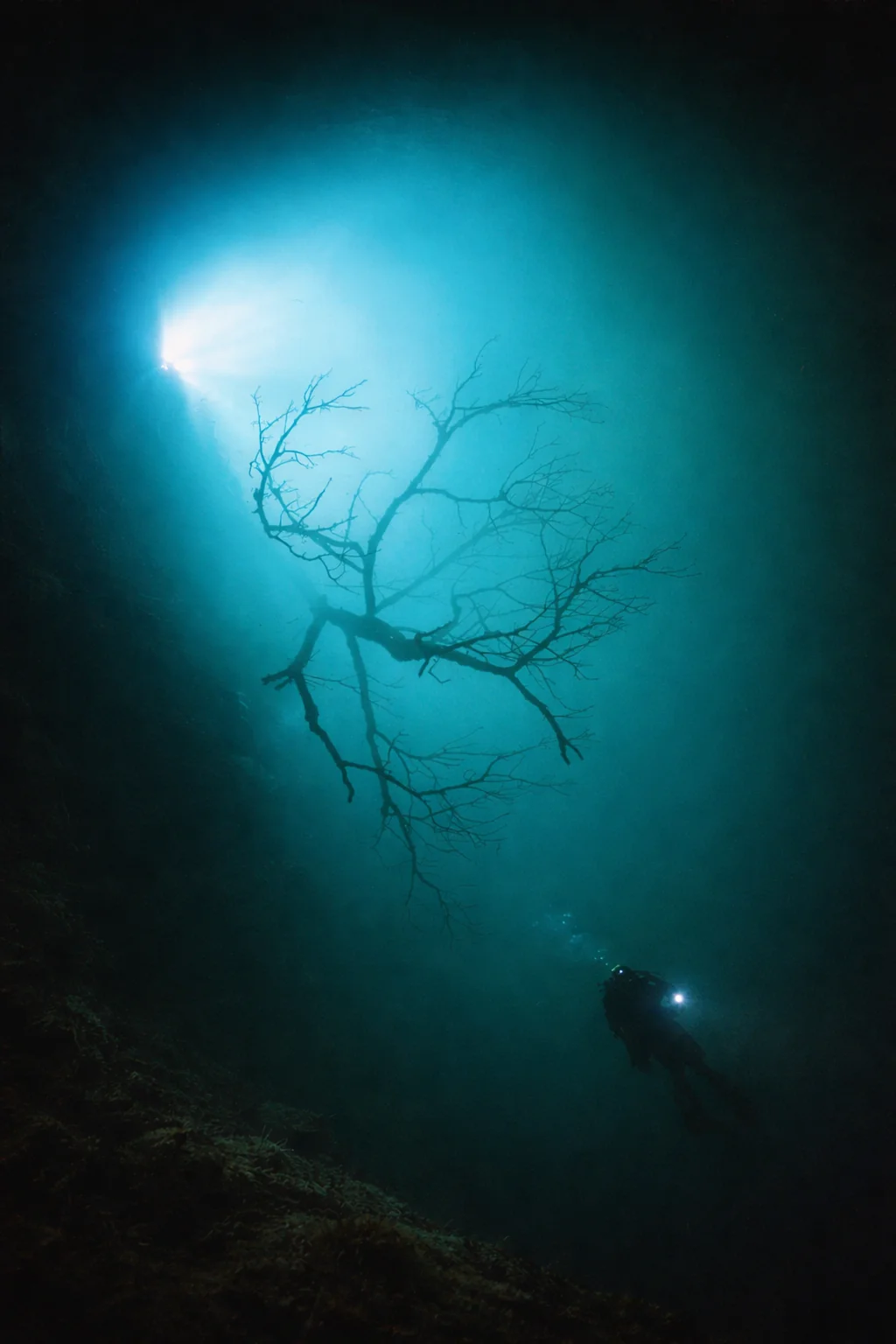
Angelita is not the classic swim-through cavern-style cenote. It feels more like dropping into a deep pit, with sunlight above, submerged trees below, and the famous sulfur cloud creating a strange underwater landscape.
Read more about why this Tulum cenote dive is one of our favorites, who it is best for, and how to plan it with another cenote.
Ready to plan your cenote dive?