Travel essentials
Sort the practical details before the trip starts.
The Riviera Maya is easy to enjoy when the simple logistics are already sorted. Money, ATMs, paying in pesos, what to pack, and understanding the general weather pattern are not glamorous topics, but they make the trip smoother once you are here.
Cash vs cards
The smart move is not choosing one payment method. It is using each one where it makes sense.
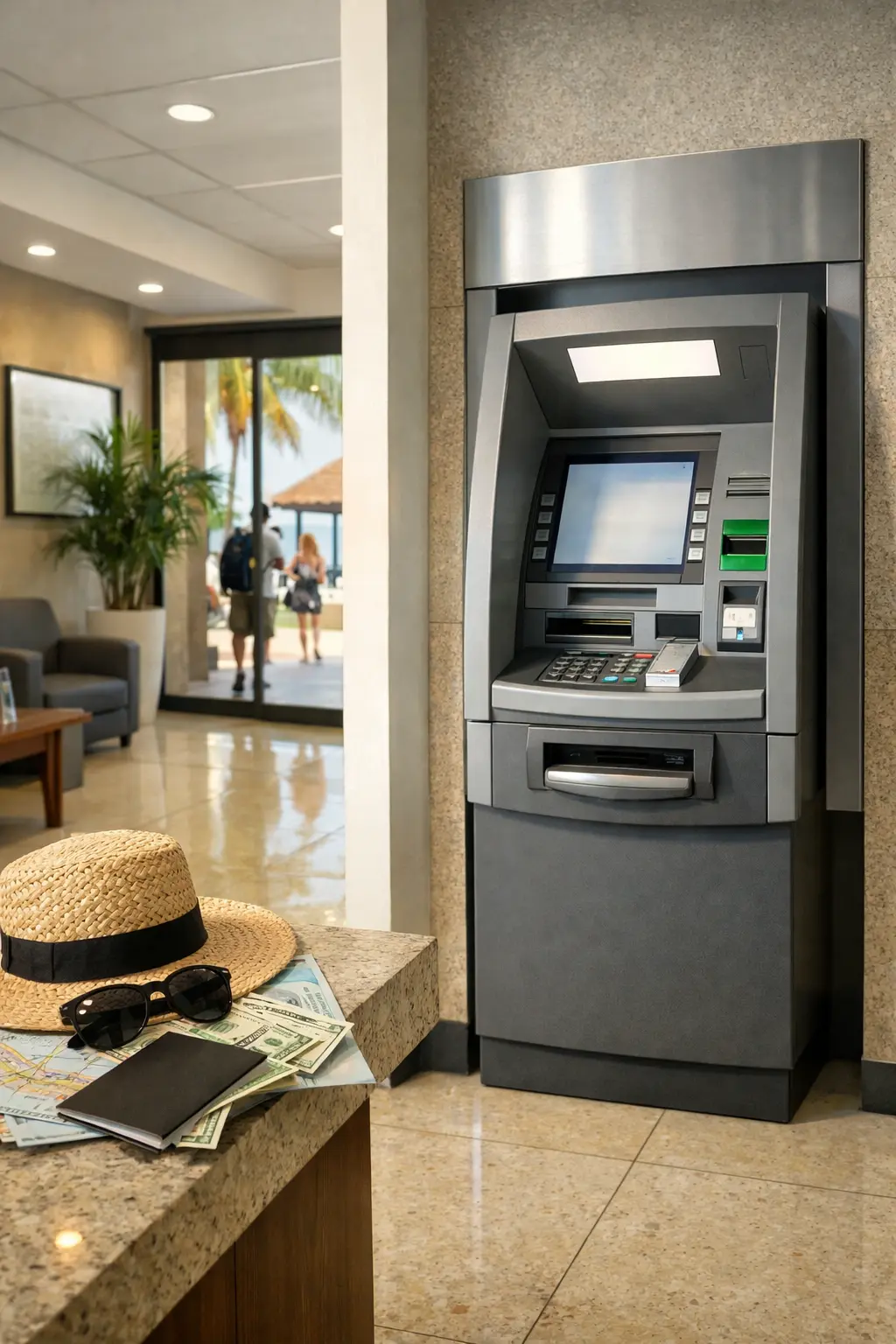
Cards work well for many bigger purchases in the Riviera Maya, especially hotels, larger restaurants, organized tours, supermarkets, and other established businesses in tourist areas.
Cash still matters more than some travelers expect. Tips, smaller local restaurants, collectivos, taxis, beach vendors, and many everyday transactions are often easier in pesos. If you show up relying on cards only, you create unnecessary friction.
Usually fine to pay by card
- Hotels and larger stays
- Bigger restaurants
- Supermarkets
- Organized tours and activities
Usually easier in cash
- Tips
- Collectivos
- Local taxis
- Small shops and beach vendors
ATM basics
Use bank ATMs only when you can, not random machines on the street.
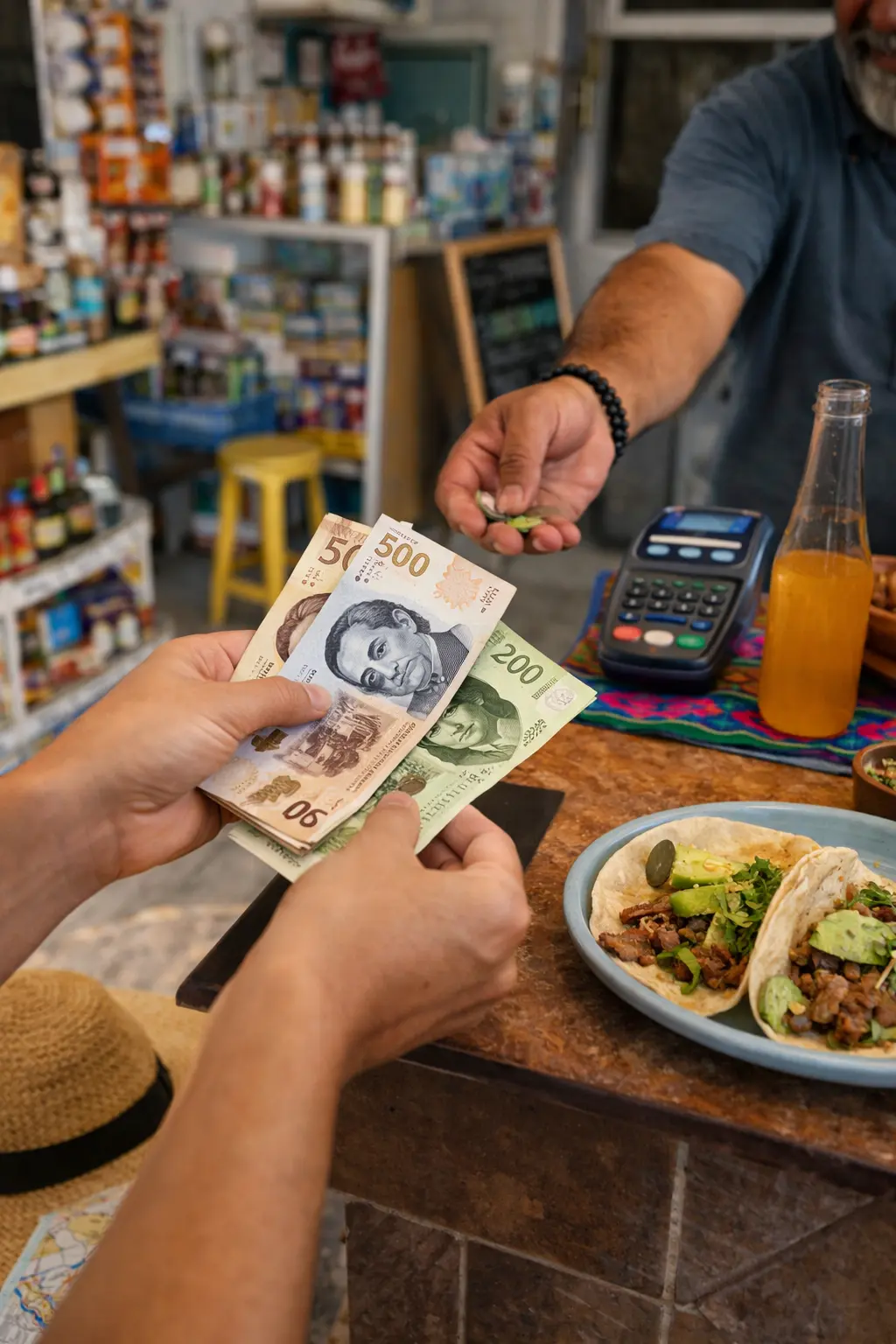
If you need cash, use ATMs inside a bank branch, a bank lobby, or a large supermarket or mall. That is the cleaner habit.
Avoid random street ATMs and standalone convenience-store machines when you can. Official travel safety advice consistently recommends using ATMs in safe, well-lit areas, ideally within banks, because they are less exposed to fraud and skimming risk than isolated machines.
Better ATM choices
- Inside bank branches
- Inside bank lobbies
- Large supermarkets
- Malls and well-controlled indoor areas
Skip when possible
- Random outdoor machines
- Standalone convenience-store ATMs
- Any machine that looks loose, damaged, or strange
Important money rule
If the machine asks whether to charge you in your home currency or in pesos, choose pesos.
The biggest money mistake tourists make is accepting dynamic currency conversion. If an ATM or card terminal offers to charge you in your home currency instead of Mexican pesos, choose MXN.
That usually gives you a cleaner result than letting the machine decide the exchange on the spot. Mexico runs in pesos, and paying in pesos is usually better for pricing and easier for local businesses too.
Best habit
- Choose MXN when asked
- Pay in pesos whenever possible
- Avoid paying in U.S. dollars just because someone allows it
Fees and withdrawals
Expect ATM fees and make fewer withdrawals when that fits your comfort level.
Mexican ATMs often charge a local operator fee, and your own bank may also charge an international withdrawal fee or foreign transaction fee.
Because of that, it is usually smarter to make fewer, larger withdrawals rather than lots of small ones, as long as you stay within your own safety and comfort limits.
Common fee pattern
- Local ATM operator fee
- Your home bank's withdrawal fee
- Your card's foreign transaction fee
Practical safety
Do not rely on one card, and keep basic anti-skimming habits.
Bring at least two cards, keep them in separate places, and make sure you can lock or freeze a card in your banking app if needed.
When using an ATM, cover the keypad, look for anything loose or unusual around the card slot, and skip the machine if it looks tampered with. That is basic travel discipline and matters more in tourist zones where fraud targets visitors.
Good habits
- Bring at least two cards
- Keep them in different places
- Use your banking app lock feature if needed
- Cover the keypad at ATMs
- Inspect the card slot before using the machine
What to pack
Pack light, but bring the things that make sun, water, and day trips easier.
Packing for Playa del Carmen is usually simple. The Riviera Maya is warm, sunny, and casual most of the year, so lightweight clothes and practical basics are usually enough.
Start with light summer clothes, comfortable sandals, and at least one pair of walking shoes if you plan to explore town, visit ruins, or take day trips. Swimwear matters more than people expect, and many travelers are happier when they bring more than one swimsuit because of beaches, pools, cenotes, and water activities.
The sun can be intense, so reef-safe sunscreen, sunglasses, a hat, and a light cover-up or long-sleeve shirt make a real difference. A small day bag or backpack also helps for tours, beach days, and carrying water, sunscreen, and personal items.
If you plan to visit nicer restaurants or beach clubs, one slightly dressier outfit is enough. Overall, Playa del Carmen stays very relaxed and casual.
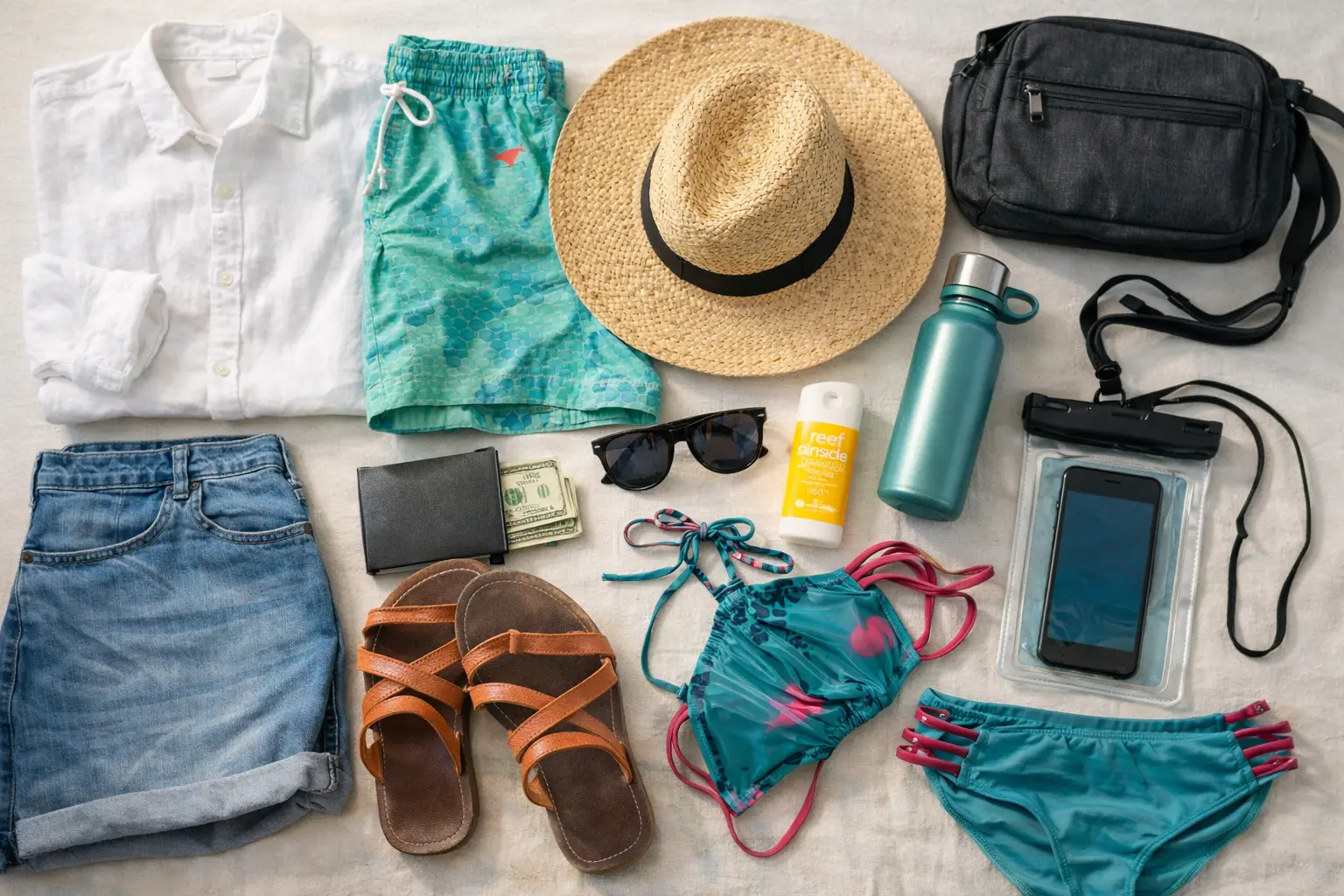
Useful extras
- Bug spray for cenotes, jungle tours, and evenings
- A reusable water bottle
- Water shoes for cenotes, rocky areas, or boat trips
- A waterproof phone pouch or dry bag
- A light rain jacket or compact poncho in rainy months
- Any personal medications you may need during the stay
Weather and seasons
It is warm year-round, but the feel of the trip still changes by season.
Playa del Carmen has a warm tropical climate through the year, which is one of the reasons so many travelers love the Riviera Maya. You can expect warm temperatures, sunshine, and beach weather in every season, but there are still a few differences worth knowing.
The dry season, usually from late fall through early spring, is the most popular time to visit. These months usually bring lower humidity, less rain, and very comfortable temperatures for beach days, sightseeing, diving, and outdoor plans.
From late spring through early fall, the region usually feels hotter and more humid. Expect stronger sun, more tropical heat, and occasional short rain showers, often later in the day. It rarely means constant bad weather, but it does mean planning for heat and quick changes.
Hurricane season in the Caribbean generally runs from June through November. That does not mean storms are constant, but it does mean travelers in these months should keep an eye on forecasts and stay a little more flexible, especially for boat trips and outdoor activities.
Simple seasonal view
- December to April: sunny, comfortable, and most popular
- May to August: hotter, more humid, and great for beach lovers
- September to November: warmer, quieter, with a higher chance of rain
No matter when you visit, light clothes, swimwear, sunscreen, and staying cool are part of the rhythm here.
Keep it simple